by Cynthia Bischoff | Mar 2, 2013 | Heartliving
 Thoughts and beliefs are the basic elements of our life creation,
and without knowing it, we can allow our individual beliefs to hold us back.
On a daily basis, we make all kinds of assumptions and attachments to things and people that may not be good for us. Some of this is based on old beliefs. So it makes sense then, that by changing our old, unhelpful beliefs, we can attract new and better experiences and circumstances into our lives.
We have both empowering as well as limiting beliefs. Some beliefs support us and some undermine us.
So be sure to ask yourself, what thoughts do I accept as true about myself? Because those thoughts will shape your life.
You see, your strongest beliefs will always play out in your life experiences. And what are your strongest beliefs?…
They are those thoughts that begin with “I am,” such as “I am kind”; “I am smart”; but also—-negative statements, such as “I am lazy.”
All “I am” thoughts are your strongest and also your most limiting or empowering thoughts because they relate directly to your sense of self.
If I believe “I am worthy” or “I am smart,” I will have a different experience than if I believe “I am worthless” or “I am powerless.”
Think about your thoughts as you would radio waves. If you tune your radio dial into a specific station, you will pick up that station. If you tune your life into “I am powerless,” you will pick up signals for that station.
We all engage in self-talk throughout the day (those words we say to ourselves in our heads). They’ve been referred to as the “Inner Critic” or “the Judge Within.”
If you are saying to yourself “I am powerless,” these words will want to validate themselves. Now in turn, imagine that these thoughts are magnetic so what do you think they are likely to attract? Yes, they’ll attract experiences to prove them right.
So the most important benefit of being positive is that this attracts positive experiences to you.
Remember: “I am worthy. I create for myself a wonderful life. I am happy and at peace.”
by Cynthia Bischoff | Feb 23, 2013 | Heartliving
I have always loved this poem and am happy to share it.
May it move your heart, too.

After a While
by Veronica Shoffstall
After a while you learn the subtle difference
between holding a hand and chaining a soul
And you learn that love doesn’t mean leaning
and company doesn’t always mean security.
And you begin to learn that kisses aren’t contracts
and presents aren’t promises
And you begin to accept your defeats
with your head up and your eyes ahead
with the grace of a woman, not the grief of a child
And you learn to build all your roads on today
because tomorrow’s ground is too uncertain for plans
and futures have a way of falling down in mid-flight.
After a while you learn that even sunshine burns
if you get too much.
So you plant your own garden and decorate your own soul
instead of waiting for someone to bring you flowers.
And you learn that you really can endure
that you really are strong
and you really do have worth
And you learn and you learn
with every goodbye you learn. . . .
by Cynthia Bischoff | Feb 14, 2013 | Heartliving
 Your growth in life requires what I call “an archeological dig into yourself” to gain understanding. In other words, it’s helpful to go back and look at old beliefs, how you got them, and whether or not they are helping you now.
I believe that often we suffer because we have roamed so far from our true core that we don’t know who we are. We haven’t looked into our own vulnerable hearts in so long, we wouldn’t recognize ourselves if we did.
We may run from this inner awareness because we feel that if we actually gave attention to it, we would be overwhelmed. Our perceptions of what is and isn’t are what make our life feel either good or bad, either sacred or monstrous. These perceptions create our point of view about who we are, about who other people are, and about life itself.
We engage in our life dramas every day. Each of us is starring in our own play called “Life” and we are partnered with other cast members to share life’s lessons. We’re all on each other’s stages together.
Our issues, our fears, and our vulnerabilities cause us to protect our real needs and I believe even to negotiate away our power. Yet at our deepest level, we want to be ourselves, say what we feel, be who we are (not with intent to harm another but simply to be true to ourselves), yet we sometimes respond by denying our feelings because we are afraid our partner will leave us. Or we may do work that we don’t like or that doesn’t inspire us because it keeps us feeling safe and secure. We decide how we think the world is and we create a list of judgments about ourselves and others.
And the truth is that we are really all looking for the same thing—which is to be loved and valued.
If you want to change and improve your life, you have to apply a gentle curiosity to what is going on in your own vulnerable heart. A wonderful exercise is to ponder the following questions:
- Who lives there in your heart?
- What does your heart wish to tell you about your life right now?
- What do you need and desire?
- What are you willing to let go of or bring into your life?
Opening your heart and listening to it improves the balance and health of your body, mind, and spirit. On this Valentine’s Day and heart month, take a moment to listen to and love your own heart.
by Cynthia Bischoff | Feb 2, 2013 | Heartliving
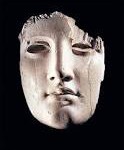 Each of us in our lifetimes creates an ADAPTIVE SELF. Carl Jung, famous Swiss psychiatrist, referred to this self as your “persona.” This persona, or adaptive self, is a mask that you create and wear to adapt to your environment and to feel safe.
It is this adaptive self that might cause you to abandon who you really are at the core (for example, maybe dismiss what you really want or need). Over time, you can begin to feel numb and empty, depressed or just lost—-acting a certain way but longing all the time for something else.
Maybe you act happy and wear a smile when deep down you are sad or depressed about life. Or you wear the mask of anger because you’re afraid to feel your sadness.
We’ve all worn masks. For example, you’ve made contracts with yourself through your beliefs as to what is available to you, how you should act, what you need to do, be, and have—-you’ve done all of this in order to survive. We’ve all done it.
In this blog, I’ll share a story about a client whom I’ll call Max.
I met Max when he was in his mid 30’s. He was an interesting man, pretty well adjusted as far as his work life and personal life, but in sharing his life story, he commented on how hard it was for him to share his emotions with anyone.
In looking back at his childhood with him—-trying to figure out his adaptive self, he recalled a very important event—-this was his grandmother’s funeral when he was 8 years old. He was very close to his grandmother, and at the funeral, he began to cry. He remembers his father saying to him sternly, “We do not cry in this family.” (Can you imagine saying this to an 8-year-old?)
Even though as an adult Max understands that what his father told him was detrimental to his psychological and emotional growth, as a child he really trusted his father’s “rules.”
It is his father’s rules that created Max’s adaptive self or mask that he’s been wearing since then. As he put it, even though he knows fully well as an adult that crying is not a sign of weakness, he has to overcome his guilty feelings when he lets himself feel sad in front of someone.
So, I reminded Max that it is important to look back at old contracts he has made with himself, to dig them up, void them if necessary, and/or rewrite them. Max did this exercise and created a mantra for himself–“I feel and honor my feelings fully.”
What old contracts do you have that need to be voided or rewritten? Exploring and removing your adaptive mask can help you “course correct” and move toward more authentic living on your journey.
by Cynthia Bischoff | Jan 26, 2013 | Heartliving
 Feeling connected is important to you from the beginning to the end of your life (whether you think this is true or not).
Children especially want to know that they belong in their world and that they will be okay, whether they can express this or not.
In fact, do you know what research shows is a child’s greatest fear? A child’s greatest fear is abandonment.
This plays out in adult life as fear not only of abandonment, but also of rejection, of loss, of betrayal, and so on. Interestingly, some people who are in a situation they find difficult will even leave others first so that they will not be “left.”
So, back to the child and how this dynamic plays out–as the vulnerable child grows, the child begins to move about, and a conflict between a need for both separation and connection generally occurs at some point. While there is a need for connection, what is not as easily understood is that each of us also at some point has a need for separation-—to be able to stand independently on our own.
So from childhood on, while we may venture to be independent, we may also wish to remain connected. These opposing needs for both connection and separation play out continually throughout our lives and affect our sense of self (who we think we are, who we become).
How this may play out in a relationship is that partners may have a need to be close to each other, yet at the same time an equal need to have space and distance.
With open communication and trust, a healthy balance can usually be achieved.